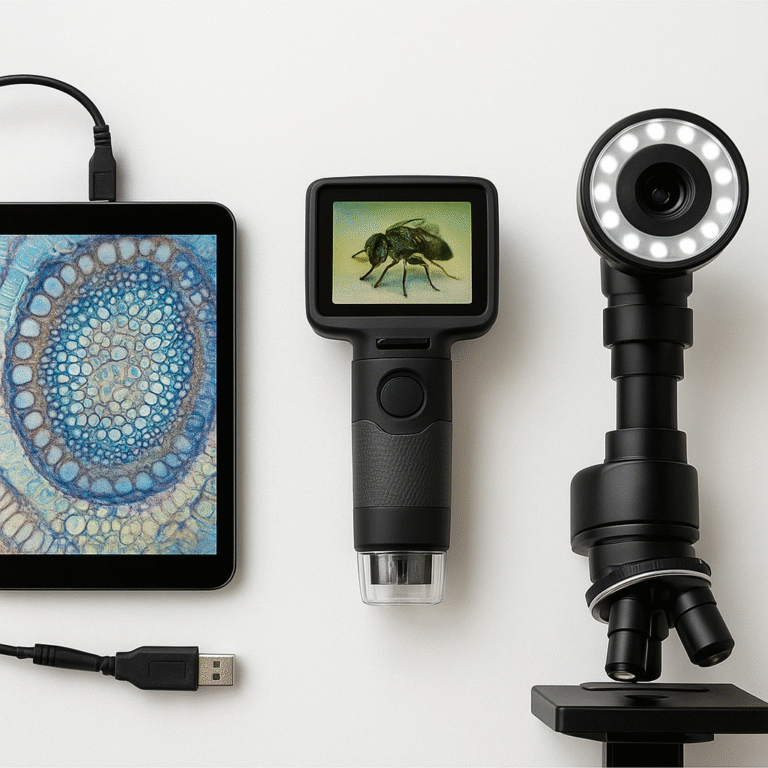
Choosing the right microscope is essential for obtaining accurate observations, improving work efficiency, and achieving reliable results. With so many microscope types available, selecting the most suitable model can be challenging. This guide from Murzider will help you understand the main microscope categories and their applications.
1. Biological Microscopes
Biological microscopes are designed for observing cells, tissues, microorganisms, and other biological specimens. They are widely used in schools, laboratories, hospitals, and research institutions.
Best for:
- Cell observation
- Educational training
- Medical diagnostics
- Biological research
2. Fluorescence Microscopes
Fluorescence microscopes use specialized light sources and filters to detect fluorescent signals in samples. They are commonly used in life science and biomedical research.
Best for:
- Cellular imaging
- Pathology studies
- Biomedical research
- Fluorescent labeling analysis
3. Industrial Digital Microscopes
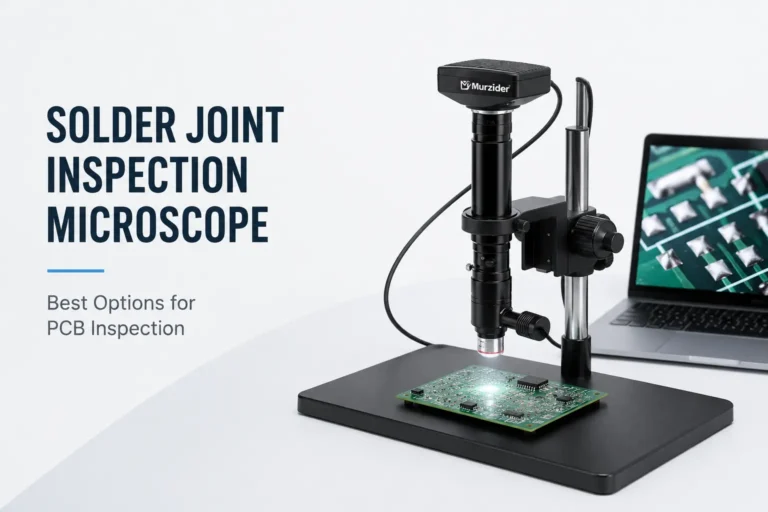
Industrial digital microscopes combine optical magnification with digital imaging technology, making them ideal for inspection, measurement, and quality control.
Best for:
- PCB inspection
- Electronics repair
- Industrial maintenance
- Quality control and failure analysis
4. Metallurgical Microscopes
Metallurgical microscopes are specifically designed to examine opaque materials such as metals, alloys, ceramics, and industrial components.
Best for:
- Material analysis
- Metal structure inspection
- Manufacturing quality control
- Industrial laboratories
5. Polarizing Microscopes
Polarizing microscopes utilize polarized light to analyze anisotropic materials and crystal structures.
Best for:
- Geological studies
- Mineral identification
- Crystal analysis
- Material research
6. Stereo Microscopes
Stereo microscopes provide a three-dimensional view with a long working distance, making them ideal for inspection and precision assembly work.
Best for:
- Electronics assembly
- Jewelry inspection
- Dental laboratories
- Precision manufacturing
7. Phase Contrast Microscopes
Phase contrast microscopes allow users to observe transparent and unstained specimens without special preparation.
Best for:
- Live cell observation
- Microbiology research
- Clinical laboratories
- Cell culture analysis
8. Accessories & Cameras
Microscope cameras, displays, and accessories can significantly improve imaging capabilities and workflow efficiency.
Common accessories include:
- Digital cameras
- HDMI cameras
- LCD display systems
- Measurement software
- Objective lenses
How to Choose the Right Microscope
Before purchasing a microscope, consider the following factors:
- Application requirements
- Magnification range
- Imaging quality
- Digital imaging needs
- Budget and future expansion
At Murzider, we offer a complete range of professional microscope solutions, including Fluorescence Microscopes, Biological Microscopes, Industrial Digital Microscopes, Metallurgical Microscopes, Polarizing Microscopes, Stereo Microscopes, Phase Contrast Microscopes, and Accessories & Cameras.
Whether you work in education, research, healthcare, manufacturing, electronics, or quality control, Murzider can help you find the ideal microscope for your specific needs.
Contact our team today to learn more about our microscope solutions and customization options.
Frequently Asked Questions
Choose a microscope based on your application. Biological microscopes are best for cells and tissues, while stereo and digital microscopes are ideal for inspection, assembly, and quality control.
Biological microscopes provide higher magnification for viewing microscopic specimens. Stereo microscopes offer a 3D view and longer working distance for handling objects and inspections.
Most biological applications use 40×–1000× magnification, while industrial inspection and electronics work are typically performed between 10× and 200×.
Yes. Digital microscopes allow image capture, video recording, measurement, and easy sharing, making them popular for industrial inspection, research, and documentation.
Industrial Digital Microscopes, Stereo Microscopes, and Metallurgical Microscopes are commonly used for electronics inspection, material analysis, manufacturing, and quality control.